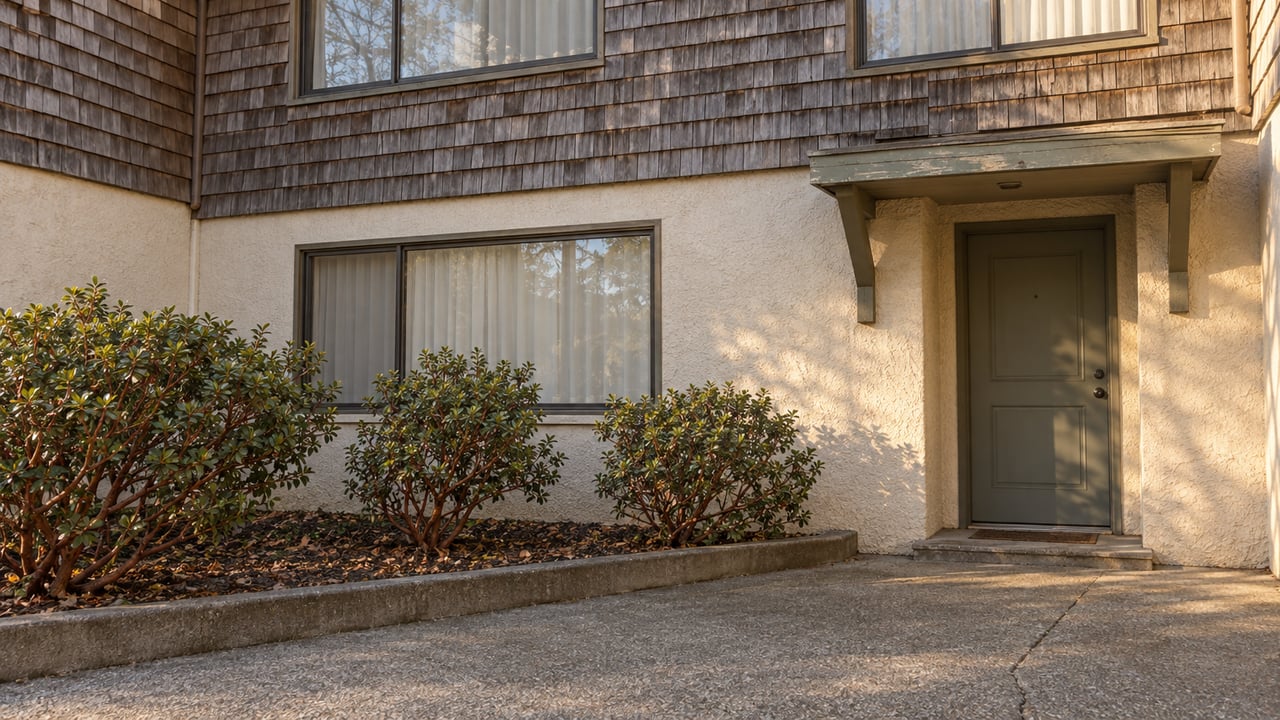
In Novato, the Lowest Rents Now Cost the Most to Renovate Around
October 22, 2026
October 22, 2026
In April 2025, Novato inspectors declared the apartment building at 6 Romar Court unsafe to live in. According to the Marin Independent Journal, 42 residents in nine apartments were evicted on short notice. The city stepped in and paid each household $7,236 in relocation assistance, which it described as two months of market-rate rent plus support for utility deposits. The Independent Journal reported on June 14, 2026 that a hearing officer had ordered the owners to repay the city $89,707. That figure covers relocation costs, staff time, legal fees and penalties. The building was still vacant at the time of that report.
The Independent Journal reported that the incident led the city to adopt a tenant protection ordinance. That ordinance is now in force. For anyone buying an older Novato apartment building to renovate, it changes the math in a way that runs against the usual value-add logic.
The Novato City Council adopted Ordinance No. 1731, which added Section 4-17 to the Novato Municipal Code, on April 28, 2026. It took effect May 28, 2026. A transaction can run into it before anyone touches a wall.
Section 4-17.4 of the ordinance requires landlords to give each tenant household a written notice of tenant rights at these points:
The notice must be in English and Spanish. If the lease is in another language, or a tenant asks for one, an accurate translation in that language is also required. A missing notice has real consequences. Under the ordinance, any rent increase, change in terms or termination notice is "invalid and unenforceable until such non-compliance is cured."
For a seller, that makes the notice file part of due diligence. If the 90-day notice was never delivered, the rent increases on the rent roll may not hold up. A buyer has a separate 30-day clock that starts at closing. The ordinance applies to tenants from the first day of their lease. The city's comparison of state law and NMC 4-17 says AB 1482 generally applies only after more than 12 months, so recent move-ins are not a gap the way they were under state law.
The ordinance covers only units inside Novato city limits, and unincorporated properties are not subject to it. The city points owners to the Marin Map Viewer jurisdiction lookup to confirm.
The ordinance keeps state-law treatment for owner move-in, withdrawal from the market and at-fault evictions. Its larger changes are to relocation assistance and right-of-return rules when tenants are displaced for substantial renovation or a government order to vacate. Beyond the first 30 days of displacement, those payments are tied to HUD's Fair Market Rent for Marin County. Marin is part of HUD's San Francisco FMR area, along with San Francisco and San Mateo counties.
The FY2027 schedule took effect October 1, 2026.
| Unit size | FY2026 FMR | FY2027 FMR |
|---|---|---|
| Studio | $2,485 | $2,574 |
| 1 bedroom | $2,977 | $3,003 |
| 2 bedroom | $3,604 | $3,697 |
| 3 bedroom | $4,604 | $4,832 |
| 4 bedroom | $4,772 | $5,439 |
These are benchmarks, not asking rents. For a market reference, the Independent Journal reported in April 2026 that Serenity at Larkspur averaged $2,663 for a one-bedroom and $3,377 for a two-bedroom when it sold. Both figures are below the FY2027 FMR for those unit sizes. HUD also lists San Francisco among the areas with FY2027 reevaluation requests, so these figures could still change.
Section 4-17.8 sets temporary relocation pay by length of displacement:
The tenant keeps paying rent throughout to remain eligible. The rent differential is the gap between what the tenant pays and fair market rent. If the tenant already pays more than fair market rent, no differential is owed.
So from day 31 on, every displaced tenant receives at least FMR for each 30 days. The owner collects whatever the lease says. The owner's net cost is roughly the distance between the two, and that distance is greatest on the units with the lowest rents. Below is an illustration for two one-bedrooms in the same building, each displaced for 90 days, using the FY2027 one-bedroom FMR of $3,003:
| Long-tenured unit at $1,900 | Recently leased unit at $3,100 | |
|---|---|---|
| Per diem, days 1 to 30 | $7,500 | $7,500 |
| Payments on days 31 and 61 | $6,006 | $6,200 |
| Total paid to tenant | $13,506 | $13,700 |
| Rent collected over 90 days | $5,700 | $9,300 |
| Estimated net cost | $7,806 | $4,400 |
| Net cost in months of current rent | About 4.1 | About 1.4 |
These are estimates. The $1,900 and $3,100 rents are hypothetical. The ordinance defines the rent differential using fair market rent "as established by the payment standards for the Section 8 Housing Choice Voucher Program in the County of Marin." Payment standards can differ from the HUD schedule above, so the exact payment on a real file should be confirmed.
The direction of the result does not depend on that detail. The below-market unit is why the building looked like a value-add opportunity, and it costs nearly twice as much in dollars to renovate around. Measured against the rent it brings in, it costs almost three times as much.
The second change matters more than the dollar amount. Once the work is finished, the landlord has 30 days to offer the tenant the unit back at the rent in effect when the notice was served, plus any lawful annual increases. The tenant then has 30 days to accept.
The rent stays the same unless the tenant chooses to leave for good. A tenant can make that choice within 30 days of receiving the termination notice. They then receive two times the FMR, never less than one month's rent, plus documented moving expenses, paid within 15 days. Using FY2027 figures, that comes to $6,006 plus moving costs for a one-bedroom. For the hypothetical $1,900 tenant, that is more than three months of rent.
The work also has to qualify. Under the ordinance's definition, substantial renovation is:
"repair or renovation work performed by a landlord in good faith... after the landlord has obtained all necessary permits from the City that cannot be performed while the tenant occupies the rental unit and that improves the property by prolonging its useful life or adding value."
The work must also replace or substantially modify a structural, electrical, plumbing or mechanical system that requires a permit, or abate hazardous materials such as lead-based paint, mold, pests or asbestos. Before serving notice, the landlord must give tenants copies of the issued permits and a description of the work, explaining why the unit must be vacant and how the work meets the definition. Termination notices require at least 30 days and must be sent to the city within 10 days of service. For a buyer, permitting now sits on the critical path before any unit can turn over.
The ordinance does not set rents. The city states that it creates no rent control. The statewide cap still applies. Marin County reports that the allowable AB 1482 increase is 8.8% starting August 1, 2026, based on a 3.8% regional CPI.
Underpaying is expensive. If a landlord fails to pay temporary or permanent relocation, the tenant can sue for two times the amount owed, plus costs and attorney's fees, within a three-year limitations period. The city can also enforce the ordinance through citations, administrative fines and injunctions.
All of this adds cost to the existing stock, and new construction is not arriving soon to replace it. The Independent Journal reported in March 2026 that Novato issued 15 housing permits in 2025, while entitlements across 2024 and 2025 totaled 961 residences. The city called the gap between approvals and building permits a continuing challenge.
The approved projects are also not built for the middle of the market. 7299 Redwood Blvd Apartments received conditional approval on September 22, 2025. It is a proposed 82-unit, five-story building with 73 low-income units, eight very-low-income units and one market-rate manager's unit. The plan for the former Fireman's Fund campus allows 1,000 to 1,300 homes, but each project there still needs design review and building permits. Demolition on the campus was underway in December 2025.
For market-rate renters, Novato's older apartment buildings remain the main supply. Older buildings with below-market rents now carry an added cost, which buyers can price unit by unit.
Does the ordinance cover a newer building? Yes, in most cases. The city lists units newer than 15 years old among those covered, along with deed-restricted affordable units and some units that are not legally permitted.
Is a single-family rental covered? Single-family homes and single condominium units owned by individuals are exempt. Those owned by corporations or REITs are not.
What do owner move-in and withdrawal from the market cost? According to the city's FAQ, owner move-in requires one month of HUD FMR plus documented moving expenses. Withdrawal from the rental market requires two months of FMR plus moving expenses. Confirm the payment deadline against the ordinance text itself, since the deadline governs whether a payment counts as on time.
This post is general information about a local ordinance, not legal, tax or financial advice. Before acting on a specific building, confirm how the rules apply with a California real estate attorney.
If you are underwriting a Novato apartment building, or preparing one for sale, Mershad Rezayati can model the relocation exposure for each unit against your renovation scope. That way, you can account for it in your offer price or your asking price before negotiations start. Get in Touch.
Stay up to date on the latest real estate trends.


Why Marin County Continues to Attract Second Home Buyers

Is Marin County a Good Market for Fix and Flip Investing?


With integrity and a strong work ethic, we deliver a level of service at the forefront of today's real estate market. We offer the services of housing market experts, marketing specialists, and a home-closing real estate team, so your buying and selling experience is in clear view and at ease.